Diamond Game: A Pro Review for Small Business Merch
As an embroidery designer who has digitized thousands of logos and reviewed countless machine embroidery design files for commercial use, I approach every new asset with a critical eye. It is not just about whether a pattern looks pretty on a screen; it is about how it performs under the needle, how it wears after fifty washes, and how it elevates a brand's identity. Today, I am reviewing the Diamond Game embroidery design, a file that promises elegance for collars and small accents. For small business owners, Etsy sellers, and apparel decorators, understanding the nuance of such a design is crucial before committing to a production run.
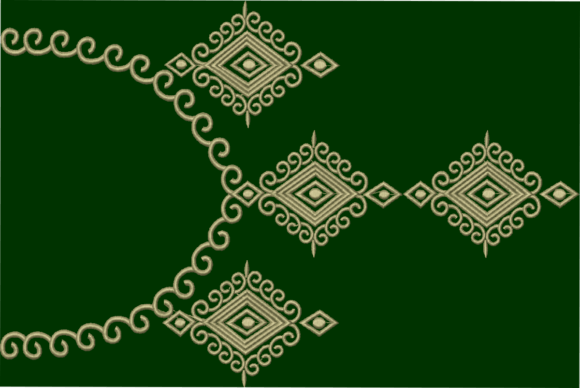
The first impression of Diamond Game is one of refined simplicity. The product description highlights that this is a "very beautiful design for decorating a collar," which immediately signals its intended scale and placement. Unlike bold, blocky logos meant for the center chest of a heavy hoodie, this design feels decorative, precise, and potentially premium. The fact that it is embroidered in a single color suggests a focus on shape and negative space rather than complex shading. This monochromatic approach is often a hallmark of sophisticated brand identity, allowing the texture of the thread and the fabric to do the heavy lifting. It feels modern yet classic, suitable for a boutique, a high-end café, or a creative studio looking to add a subtle touch of luxury to their custom apparel.
Real-World Application for Branded Merchandise
When evaluating Diamond Game for real business use, we must look beyond the digital preview. The description notes the pattern is made in two measurements, which offers flexibility—a vital feature for small business merch creators who need to adapt assets across different products. Here is how I see this design performing in various commercial scenarios:
- Collar Accents and Plackets: As suggested by the creator, this is the ideal home for Diamond Game. Placing a single-color geometric or floral motif on the collar of a polo shirt or the placket of a button-down adds an immediate sense of bespoke quality. It turns a standard uniform into a signature look.
- Embroidered Patches: If digitized with a merrow border or a clean cut-line, this design could excel as a small embroided patch. Think of a bakery adding these to their aprons or a florist attaching them to tote bags. The single-color nature keeps production costs low while maintaining visual impact.
- Cap Embroidery: The front panel of a structured cap is a prime location for small, detailed designs. Diamond Game could serve as a subtle brand mark on the side panel or even the center, provided the stitch count is low enough to prevent puckering on the curved surface.
- Tote Bag Design: For handmade brands selling at markets, a small cluster of these designs near the bottom corner of a canvas tote creates a stylish, understated logo placement that customers love.
- Product Packaging Accents: While primarily for Clothing, this design could be stitched onto fabric tags or hangtags attached to packaged goods, enhancing the unboxing experience.
Critical Considerations for Production
While the aesthetic appeal of Diamond Game is evident, a professional review must address the technical challenges. The description states the pattern is made with care, but "care" in digitizing does not always guarantee success on every fabric type. Here are the areas where you must proceed with caution:
Stitch Density and Fabric Texture: Single-color designs often rely on solid fills or satin stitches. If the stitch density is too high, the design can become stiff and may cause lightweight fabrics to pucker. Conversely, if the density is too low, the fabric underneath might show through, ruining the crisp look. Always test this design on the specific fabric texture you intend to use. A smooth twill behaves very differently from a textured linen or a stretchy knit.
Small Patch Sizes: The mention of "two measurements" is promising, but you must verify the smallest size. Fine details in a diamond pattern can merge together if scaled down too far. If you plan to use this as a tiny sleeve detail or on a child's garment, inspect the spacing between elements. If the gaps are smaller than the thread width, the design will lose its definition.
Thread Color Contrast: Since this is a single-color design, your choice of thread colors is the only variable you have to create contrast. On dark uniforms, ensure you use a high-contrast thread (like white or metallic) so the design doesn't disappear. On light fabrics, a tonal thread (e.g., navy on black) can create a sophisticated "ghost" effect, but it requires perfect lighting to be appreciated.
Elevating Brand Identity and Customer Trust
In the world of commercial embroidery, consistency is king. Using a well-executed design like Diamond Game across all your touchpoints—from staff aprons to customer gifts—reinforces professionalism. When a customer sees a neat, intentional emblem on a collar rather than a generic printed logo, it signals that the business values quality. This attention to detail builds trust. It suggests that if the business cares this much about their finished product's appearance, they likely care just as much about their service or the quality of the goods they sell.
Furthermore, for handmade brands, this type of Embroidery adds tangible value. It differentiates your items from mass-produced competitors. A tote bag with a delicate, stitched diamond motif feels like a limited-edition art piece, justifying a higher price point and increasing buyer engagement.
Practical Designer Notes for Implementation
Before you load this digital embroidery file into your machine for a client order, follow these essential steps to ensure success:
- Test in Black and White First: Stitch a sample using black thread on white fabric and vice versa. This reveals the true structure of the design without the distraction of color matching.
- Verify Hoop Size: Confirm that the larger of the two measurements fits comfortably within your available hoop size, leaving enough margin for the frame clamps.
- Select the Right Stabilizer: For collar applications or caps, a cut-away stabilizer is often best to prevent distortion over time. For towels or stretchy knits, consider a water-soluble topper to manage the pile or nap.
- Create a Printable Mockup: Before stitching, place the design file into a printable mockup of your garment. This helps you visualize the scale and placement relative to seams and buttons.
- Check Commercial Licensing: Always review the license terms included with the download. Ensure you have the rights to use the design for small business merch and unlimited production runs if necessary.
- Compare Design Assets: Place Diamond Game beside your existing logo or other design assets. Does it complement your current visual language, or does it clash?
In conclusion, Diamond Game appears to be a versatile and elegant asset for the discerning decorator. Its strength lies in its simplicity and its specific suitability for accent locations like collars and cuffs. However, like any machine embroidery design, its success depends on proper testing, appropriate material selection, and an understanding of how single-color stitching interacts with different textiles. By treating this file with the technical respect it requires, small business owners can transform a simple pattern into a powerful tool for brand storytelling.