Dear Santa, It Was the Gnome: A Pro Review for Business Merch
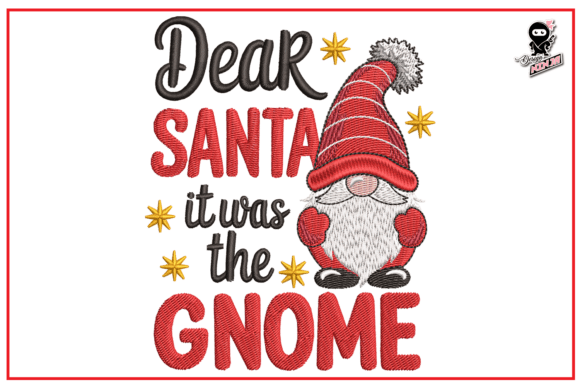
As an embroidery designer who spends countless hours digitizing and testing files for commercial clients, I approach every new machine embroidery design with a critical eye. It is not just about whether a image looks cute on a screen; it is about how that digital embroidery file translates into a tangible finished product that builds a brand. Today, I am reviewing Dear Santa, It Was the Gnome, a festive design that holds significant potential for small business owners looking to elevate their holiday merchandise.
My first impression of Dear Santa, It Was the Gnome is that it strikes a perfect balance between playful charm and professional execution. The title alone suggests a narrative quality that resonates well with the current trend of whimsical, story-driven branding. For boutique owners, bakeries, and creative studios, this isn't just a decoration; it is a conversation starter. The design feels handmade yet polished, avoiding the cluttered look that often plagues seasonal graphics. It possesses a friendly, rustic personality that fits seamlessly into the aesthetic of artisanal brands without sacrificing the clarity needed for commercial application.
Real-World Application for Small Business Merch
When evaluating Dear Santa, It Was the Gnome for actual business use, the versatility becomes immediately apparent. For a local coffee shop or bakery, this design is an ideal candidate for staff apron embroidery. Placed on the bib or the lower corner of an apron, it adds a touch of holiday spirit that feels authentic rather than corporate. Similarly, for retail boutiques, this design works exceptionally well as a chest logo accent on heavy cotton tees or hoodies. It serves as a subtle nod to the season while maintaining the clean lines required for custom apparel.
I can easily envision this being utilized as a standalone embroidered patch. Patches are a massive revenue stream for Etsy sellers and merch creators. By stitching Dear Santa, It Was the Gnome onto a twill or felt base, you create a high-value add-on item that customers love to collect. These patches can be sold individually or attached to tote bag design projects, turning a simple canvas bag into a limited-edition holiday gift. Furthermore, for service-based businesses like florists or pet groomers, this design could be applied to work shirts or even used as a branded element on packaging accents, such as embroidered tags on gift bags.
The strength of this embroidery file lies in its ability to enhance brand identity. In a market saturated with generic holiday items, using a specific, character-driven design like this helps establish visual consistency. It tells your customers that your brand pays attention to details and embraces creativity. This level of thoughtfulness directly impacts customer trust and recognition. When a client receives a tote bag or a uniform featuring such a distinct design, the perceived value of the handmade product increases, fostering deeper buyer engagement.
Technical Considerations and Placement Strategy
While the artistic merit of Dear Santa, It Was the Gnome is high, a professional review must address the technical realities of production. Not every surface is suitable for every design. If you plan to use this on cap embroidery projects, you must be cautious. Caps have curved, structured fronts that can distort detailed imagery. Before running a full production batch, test the design on a similar cap structure to ensure the gnome's features do not get lost in the curve.
Another critical factor is stitch density. High-density designs can make fabric stiff and uncomfortable, which is a dealbreaker for wearable merchandise. If the design includes large fill areas, ensure your digitizer has optimized the underlay and pull compensation. For smaller applications, such as a pocket square on a chef's coat or a small label on a plush toy, verify that the tiny lettering or fine details remain legible. On textured fabrics like wool blends or heavy canvas, fine outlines might disappear. Always consider the fabric texture of your base material; a smooth polo shirt will yield different results than a rustic linen tote.
Color contrast is also vital, especially if you are embroidering on dark uniforms. The description mentions bringing creativity to projects, but in a commercial setting, visibility is key. Ensure the thread colors selected for the gnome pop against the background fabric. If the design relies on subtle shading, it may need adjustment for dark garments to maintain its impact.
Designer Notes for Commercial Success
To ensure Dear Santa, It Was the Gnome performs flawlessly in your commercial embroidery workflow, I recommend following a strict testing protocol. First, stitch a sample in black and white only. This removes the distraction of color and allows you to inspect the spacing and structural integrity of the stitches. Check if the design holds up at your intended size; sometimes a design looks great at six inches but fails when scaled down to two inches for a patch.
Confirm the required hoop size before purchasing or scheduling production. While the product description highlights high quality, it does not specify exact dimensions or formats, so you must verify these details match your machine's capabilities. Additionally, always use the proper stabilizer for your specific fabric type. A cut-away stabilizer is often best for stretchy garments to prevent distortion over time, while tear-away might suffice for stable home decor items.
Before presenting this to a client or listing it in your shop, create a printable mockup. Visualizing the design on a real-world object helps you spot potential issues with placement or scale that aren't obvious in the digital file. Compare Dear Santa, It Was the Gnome beside your other design assets to ensure it fits your overall visual language. Finally, and most importantly, confirm the commercial licensing terms. Since this is intended for small business merch and resale, you must be certain that the license allows for unlimited physical sales or if there are restrictions on the number of finished products you can create.
In conclusion, Dear Santa, It Was the Gnome is a robust contender for holiday collections. Its blend of whimsy and professionalism makes it a versatile tool for apparel decorators and crafters alike. By respecting the technical limitations of embroidery and applying strategic placement, this design can become a cornerstone of your seasonal offerings, driving both sales and brand loyalty.